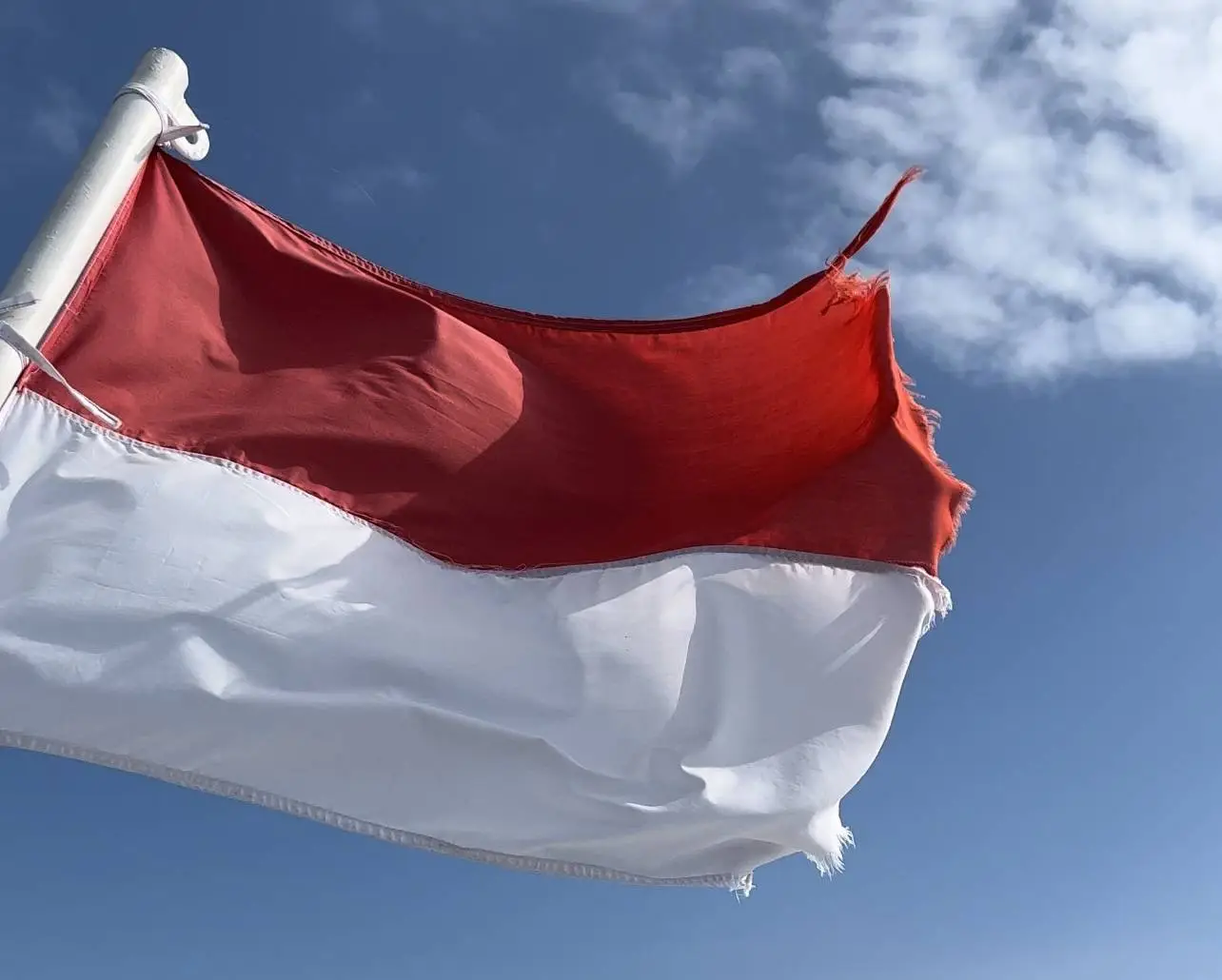
Indonesian on Bali in 2026: essential words, phrases and polite communication
Updated 4 September 2026. Visitors to Bali do not need to learn all of Indonesian before a trip. A few polite phrases, basic words and a willingness to speak slowly are enough to make everyday situations easier. Bahasa Indonesia is Indonesia's national language and a shared language between people from different regions; Balinese is also used on the island, especially in local and religious life. English is common in tourism, but Indonesian becomes much more useful outside hotels and popular cafés.
What to know about Bahasa Indonesia
- It uses the Latin alphabet, so there is no new writing system to learn.
- Everyday grammar is relatively accessible: verbs do not change for person, while time is often clarified with words such as sudah — already, sedang — currently/in progress, and akan — will.
- Negation has two common patterns: tidak usually negates an action or quality, while bukan negates a noun or identification. Beginners can simply learn complete phrases.
- Repeating a word can mark a plural, for example buku — book and buku-buku — books. Reduplication also forms established words, so do not double every noun automatically.
Pronunciation in simple terms
Indonesian spelling is fairly phonetic, but any English or Russian approximation is only a guide. c usually sounds like “ch”, j like “j” in “jam”, g is hard, ng sounds like the end of “song”, and ny is close to “ny” in “canyon”. The letter e has more than one sound, so use dictionary audio when possible. Do not worry about a perfect accent in a short practical phrase.
Polite ways to address people
Start with permisi — excuse me, tolong — please/help, and terima kasih — thank you. For a hotel employee, driver or shop assistant, Pak is a polite form for a man and Bu for a woman; they are short forms of Bapak and Ibu. Speak calmly and do not switch to a very familiar form of address immediately.
| Bahasa Indonesia | Approximate pronunciation | Meaning |
|---|---|---|
| Selamat pagi | seh-lah-maht pah-gee | Good morning |
| Selamat siang | seh-lah-maht see-ahng | Good afternoon |
| Selamat sore | seh-lah-maht soh-reh | Good late afternoon/evening |
| Selamat malam | seh-lah-maht mah-lahm | Good evening/good night |
| Apa kabar? | ah-pah kah-bar | How are you? |
| Baik, terima kasih | bah-eek, teh-ree-mah kah-see | Fine, thank you |
| Permisi | per-mee-see | Excuse me |
| Tolong | toh-long | Please help |
| Maaf | mah-ahf | Sorry/excuse me |
| Terima kasih | teh-ree-mah kah-see | Thank you |
| Sama-sama | sah-mah sah-mah | You are welcome |
| Saya tidak mengerti | sah-yah tee-dahk mehng-er-tee | I do not understand |
| Bisa bicara bahasa Inggris? | bee-sah bee-chah-rah bah-hah-sah ing-grees | Do you speak English? |
| Berapa harganya? | beh-rah-pah har-gah-nyah | How much is it? |
| Di mana toilet? | dee mah-nah toy-let | Where is the toilet? |
| Saya mau ini | sah-yah mah-oo ee-nee | I would like this |
| Tidak pedas, ya | tee-dahk puh-dahs yah | Not spicy, please |
| Saya vegetarian | sah-yah veh-jeh-tah-ree-an | I am vegetarian |
| Ini halal? | ee-nee hah-lahl | Is this halal? |
| Bisa kirim pin lokasi? | bee-sah kee-reem peen loh-kah-see | Can you send the location pin? |
| Tolong panggil dokter | toh-long pahng-geel dok-ter | Please call a doctor |
Words that are easy to confuse
- ibu means mother; Bu/Ibu is also a polite way to address a woman.
- ibu kota means capital city; it is not the single word ibu.
- suka means to like; saya suka means I like it.
- makan means eat; makanan means food or a dish.
- minum means drink; minuman means beverage.
- pisang is banana; ikan fish; ayam chicken; babi pork/pig.
- kaki means leg or foot; kuku means nail; susu means milk.
- bagus means good/nice; buruk means bad.
Three practical rules
Language is not the same as culture. Bahasa Indonesia works in shops, hotels, transport and most everyday situations. Balinese has its own forms and levels of politeness; there is no need to pretend you speak it when you have learned Indonesian.
Keep it short. Show the address on your phone, repeat the key word and ask for a pin lokasi. For food orders, write down allergies and dietary restrictions when they matter for your health.
Check spelling and audio. The official EYD V spelling guide and KBBI Daring dictionary are useful references. Use dictionary audio rather than relying only on an English or Russian transcription.
Minimum travel set: permisi, tolong, terima kasih, maaf, berapa harganya?, di mana toilet?, saya tidak mengerti and bisa kirim pin lokasi?. Save them in your notes and do not be afraid of mistakes.
Sources checked on 4 September 2026: Indonesia Travel: Bahasa Indonesia on Bali, EYD V official spelling guide and KBBI Daring official dictionary.
Comments
Read also
All articles
How to attract customers through bloggers in Bali: using “Promo” listings
A restaurant, tour company, hotel, salon, surf school or event organiser does not always need conventional advertising.
Galungan: the day when ancestral spirits descend from the volcano
Today in Bali began the celebration of Galungan - one of the most important and significant religious events of the island. It lasts 10 days…

Go crazy and fall in love with the island forever - the best holiday in Bali
I offer you an absolutely unique, beautiful and exciting route to different parts of Bali that impressed me the most. I think you can customize…
About the seasons on the island, when is it better to fly to Bali
It is believed that Bali has 2 seasons: dry and wet. Dry lasts approximately from April to October. At this time, there is almost no…

Bali Telegram Groups and Channels in 2026: How to Search and Post Safely
Telegram is useful for quick questions about life in Bali, but a chat feed is not a verified directory. Learn how to find relevant communities,…
Why it is worthwhile for a Bali venue to be listed in “Places and venues”
A restaurant, café, bar, hotel, coworking space, salon, studio, dive centre or another offline business almost always already has at least one online presence.