Bali in 2026: 10 lesser-known facts that explain the island
Bali is often reduced to a few familiar images: ocean, surfing, temples and green rice fields. The island becomes much easier to understand when you look at the less obvious details. They are not spectacular world-record claims, but practical facts about time, water, farming, religion, wildlife and conservation.
Here are ten facts that remain useful for travellers in 2026. Ceremony dates, attraction access, weather conditions and visitor rules can change, so check with official operators before your trip.
- Bali uses several calendar cycles at the same time.
One of the most distinctive is Pawukon, a 210-day cycle made up of overlapping cycles of different lengths. This means that a date can have several names at once. Temple anniversaries and many religious ceremonies are calculated through these cycles, while Nyepi belongs to the Saka calendar. That is why important events do not fall on the same Gregorian date every year. - Bali is Indonesia's Hindu-majority island province.
Provincial statistics continue to show Hinduism as the majority religion in Bali. Local practice is not simply a copy of customs from elsewhere: Balinese Hinduism combines Hindu philosophy, ancestor veneration, local ritual traditions and ideas about harmony between people, nature and the spiritual world. Offerings outside homes, ceremonies and temple etiquette are therefore part of everyday life, not a performance created for visitors. - The rice terraces are connected to a working water-management system.
Subak is not the name of one temple or merely a beautiful way to grow rice. It is a network of canals, weirs, water temples and farmer collectives that distribute water and coordinate agricultural work. The Cultural Landscape of Bali Province, including the subak system, is on the UNESCO World Heritage List. The system developed at least as early as the ninth century and still functions, although tourism, construction and changes in the rural economy put pressure on it. - Several kinds of coastline exist close to one another.
Bali's volcanic origin is visible beyond its mountains. The coast includes dark volcanic sand, pale beaches, cliffs and coral-influenced shorelines. A beach that is good for a walk may be unsuitable for swimming because of surf, rocks or currents. Check local warnings and conditions instead of assuming that every photogenic cove is safe for the water. - The Bali myna is an island endemic, not just a rare bird.
The Bali myna (Leucopsar rothschildi) occurs naturally only on Bali. Indonesia's conservation authorities classify it as threatened with extinction, and its remaining natural habitat is especially associated with Bali Barat National Park in the west. Its white plumage, black wing and tail tips and blue skin around the eyes have made it a symbol of Bali. Seeing one in the wild requires respect for protected areas and their rules. - Balinese coffee is an origin and style, not a product found only on this island.
Coffee is grown in the Kintamani highlands in Bangli Regency. Volcanic soils and the local practice of planting coffee alongside fruit trees, including citrus, influence the character of Kintamani coffee. Indonesia has many other coffee-growing regions, so it is more accurate to talk about Kintamani or Balinese origin than the only place in the world where Balinese coffee exists. At a farm or café, ask about the beans' origin and processing method. - Nyepi turns the entire island into a place of silence.
The Balinese Day of Silence marks the New Year in the Saka calendar. For roughly 24 hours, movement, work, entertainment and visible lighting are restricted; Ngurah Rai International Airport and transport hubs close. Hotels continue to host guests under special rules, but going outside is not allowed. The date changes each year, so anyone visiting Bali around March or April should check the calendar and accommodation conditions in advance. Colourful ogoh-ogoh processions take place beforehand, but they do not remove the restrictions on the following day. - Bali's underwater world depends on the specific site and sea conditions.
Menjangan, Amed and other areas are known for diving and snorkelling, but conditions are not identical throughout the year. Visibility changes with swell, rain, currents and season. Coral is easy to damage: do not stand on reefs, touch marine life or feed animals. Choose responsible operators and follow the instructions of the national park or local guide. - Bali's temples differ in both architecture and landscape.
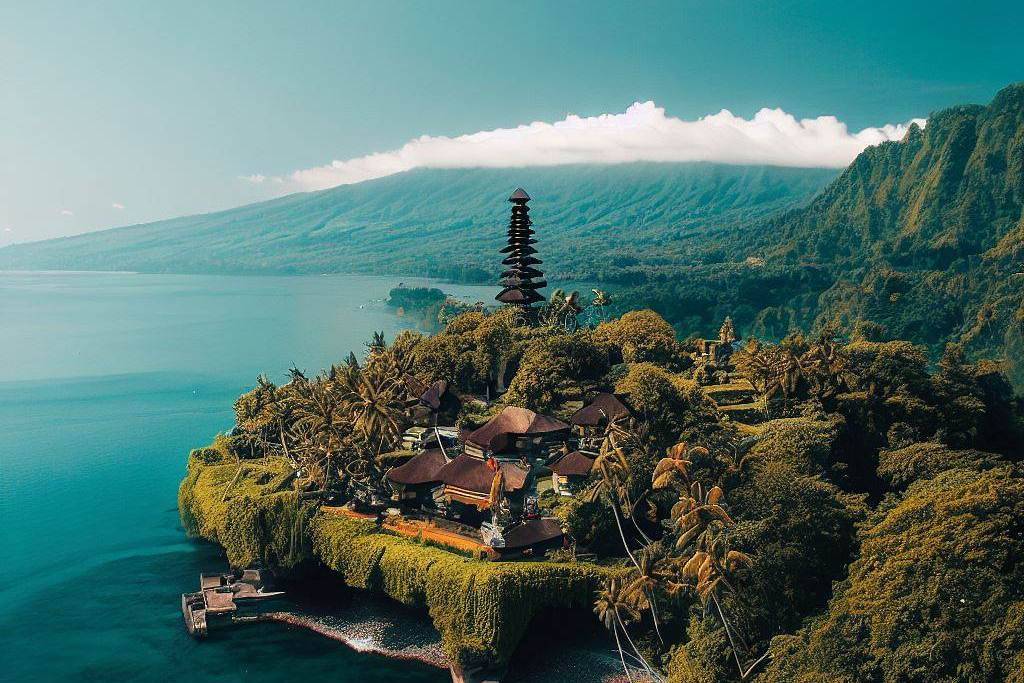
Uluwatu stands on a limestone cliff above the ocean and is experienced as a temple connected to the sea horizon. Besakih sits on the slopes of Mount Agung and is a large temple complex rather than one isolated building. Visitors should observe dress requirements, respect restricted areas and never treat an active ceremony as a show. Sarongs may be available at the entrance, but check local rules before visiting. - Volcanic terrain shapes everything from views to travel routes.
Mountains and volcanic soils created terraces, springs, lakes and several local climate zones. Agung and Batur are not only scenic backdrops; they are volcanic areas where conditions can change quickly. Before a hike, check official alerts, trail conditions and the requirements of a local operator. Temperature, cloud cover and physical effort can change noticeably even over a short distance from the coast.
These facts show Bali as a living island rather than a collection of postcards: communities still organise around water, a religious calendar structures the year, and protected nature requires care. Travelling with that context makes the experience richer and helps visitors behave responsibly by respecting ceremonies, choosing legal routes, protecting reefs and planning around days when the island follows a different rhythm.
Sources: UNESCO on Bali's cultural landscape and subak; BPS Bali, population by religion; Indonesia's Ministry of Forestry on Bali Barat National Park and the Bali myna; Indonesia Travel on Kintamani coffee; Indonesia Travel on Nyepi.
Comments
Read also
All articles
Sri Lanka vs Bali: Which Is Better for a Holiday or Long-Term Stay?
Sri Lanka and Bali are often compared as two similar tropical destinations: ocean, palm trees, surfing, exotic culture and relatively affordable living. In reality, they…
The Bali Effect: Decoding the Island's Unmatched Allure
In the realm of global tourism and expat destinations, Bali stands as a remarkable outlier, offering an enchanting blend of characteristics that set it apart…
Bali vs Mauritius: Which Is Better for a Holiday or Long-Term Stay?
Bali and Mauritius often appear on the same list of tropical destinations: ocean, palm trees, beaches, warm weather and the possibility of spending several weeks…

Where to buy European food in Bali in 2026: dairy, cheese, groceries and delicacies
An updated guide to finding European and familiar foods in Bali: MilkUp, BaliDairy, Pepito, Frestive, Bali Buda and caviar suppliers. Check prices and stock before…
Indonesian on Bali in 2026: essential words, phrases and polite communication
A practical Bahasa Indonesia guide for Bali visitors: pronunciation, polite forms of address, useful phrases for hotels, cafés and transport, and the difference between Indonesian…
Elephant Park Bali
A long time ago, very beautiful and kind elephants lived on the Indonesian island of Sumatra. They walked in the tropics, fed on palm leaves…