Bali vs Mauritius: Which Is Better for a Holiday or Long-Term Stay?
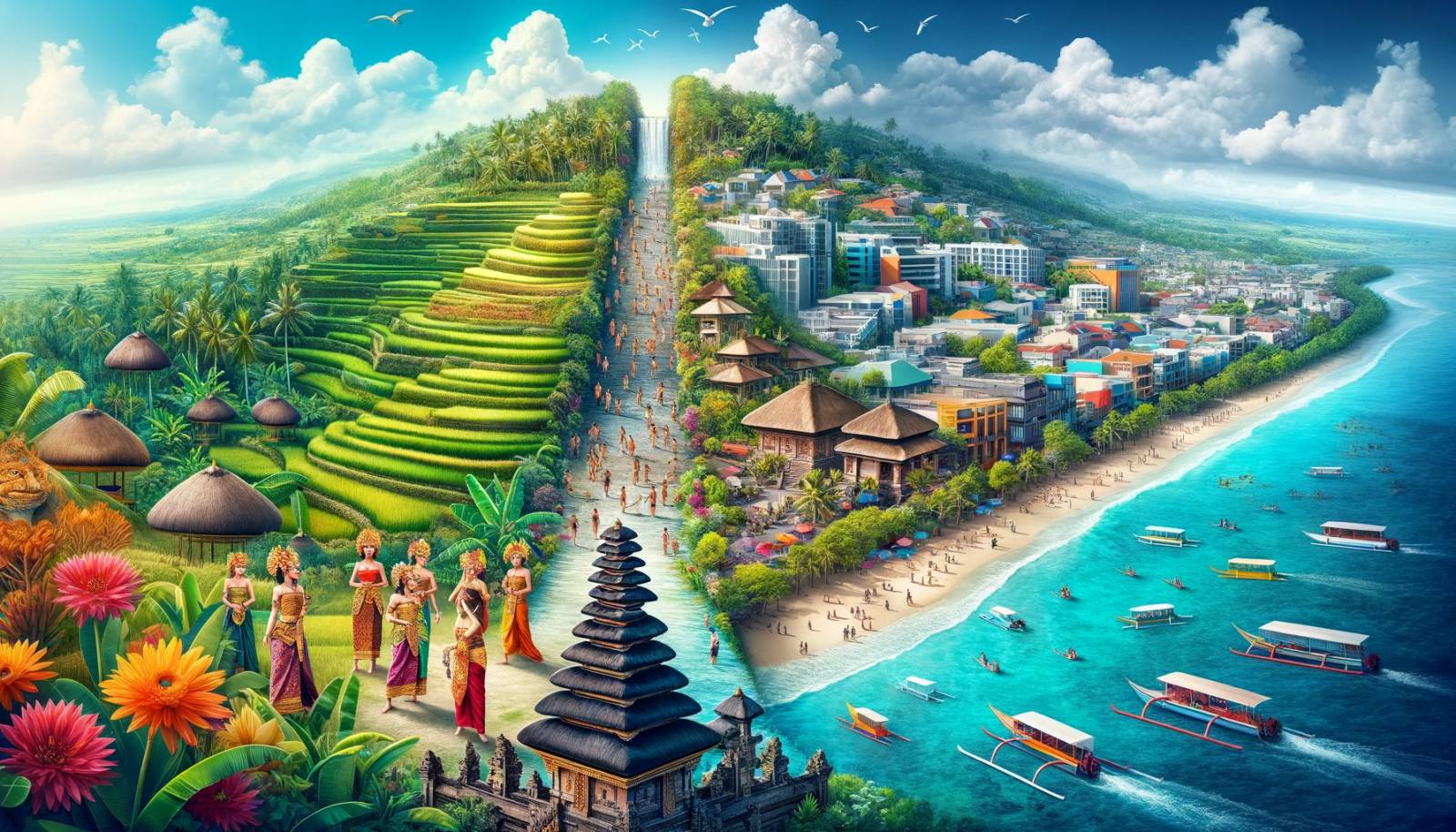
Bali and Mauritius often appear on the same list of tropical destinations: ocean, palm trees, beaches, warm weather and the possibility of spending several weeks or months away from a colder climate. In practice, however, they offer very different kinds of travel and everyday life.
Bali is part of Indonesia and one of Asia’s largest international tourism and expat hubs. It has an enormous concentration of restaurants, cafés, villas, coworking spaces, gyms, surf schools and international communities. Mauritius is an independent island nation in the Indian Ocean with a calmer rhythm, classic lagoon beaches, a road network that makes exploring by car relatively easy and a much less concentrated tourism scene.
The real choice is therefore not between two versions of the same tropical holiday, but between two very different styles of island life.
| Bali | Mauritius | |
|---|---|---|
| Best for | Surfing, cafés, villas, wellness, remote work and an active international community | Beach holidays, quieter living, snorkeling, kitesurfing and road trips |
| Beaches | Extremely varied, with strong waves and volcanic sand in many areas | Classic light-sand beaches, lagoons and coral reefs |
| Nature | Volcanoes, rice terraces, jungle, waterfalls | Mountains, gorges, waterfalls, lagoons, reefs and endemic wildlife |
| Surfing | One of the world’s major surf destinations | Available, but much less central to the island |
| Kitesurfing | Possible, but not a defining activity | One of the island’s major outdoor sports, especially around Le Morne |
| Culture | Highly visible Balinese Hindu culture | A mixture of Indian, African, European and Chinese influences |
| Food | Huge international restaurant scene plus Indonesian cuisine | Creole, Indian, French and Chinese influences |
| Transport | Weak public transport; scooters and taxis dominate | Buses, taxis and a road network well suited to independent driving |
| Remote work | One of Asia’s strongest digital-nomad ecosystems | Quieter, but supported by a renewable one-year Premium Visa |
| Nightlife | Very developed in southern Bali | Much quieter, with the main concentration in the north |
| Long stays | VOA for eligible passports, C1 visitor visa and residence categories | Entry rules depend on nationality, plus extensions and a one-year Premium Visa |
| Overall character | Fast-moving international lifestyle hub | More relaxed and self-contained island life |
The biggest difference is visible on the beaches
If your image of a tropical island involves pale sand, turquoise water and a calm lagoon, Mauritius is much closer to that classic picture.
Much of the island is surrounded by coral reefs. These create protected lagoons where ocean waves are weaker and swimming is generally easier. Mauritius has many long, light-sand beaches, including areas around Belle Mare, Flic-en-Flac, Le Morne, Trou aux Biches and Mont Choisy.
Bali is different. It certainly has beautiful beaches, but many of its most famous stretches of coast are known for waves, cliffs and dramatic scenery. Along the west coast and around Uluwatu, the ocean is often too powerful for relaxed swimming, while parts of the north and east have darker volcanic sand.
For easier swimming, visitors commonly choose Sanur, Nusa Dua, Jimbaran and selected beaches on the Bukit Peninsula. But if the main goal is a conventional holiday built around calm tropical water, Mauritius offers more options.
For surfing, the picture reverses completely. Bali is one of the world’s major surf destinations, and surfing has become part of the island’s identity. Mauritius also has excellent waves, but the surf scene is far smaller.
The islands are strong in different water sports
Bali is particularly attractive for surfing and diving. Uluwatu, Canggu and the west coast are internationally known for surf, while Amed and Tulamben are established diving areas. Around Nusa Penida, divers and snorkelers can encounter manta rays.
Mauritius is stronger for lagoon swimming, snorkeling and kitesurfing. Le Morne in particular has developed into an internationally known kitesurfing destination because of the combination of reliable wind, a protected lagoon and ocean waves outside the reef.
The coral reefs surrounding Mauritius also make snorkeling a natural part of an ordinary beach holiday. In many areas, reefs and lagoons are directly in front of hotels, apartments and public beaches rather than requiring a dedicated day trip.
The choice therefore depends on the activity. Bali has the much stronger surf culture; Mauritius can be more attractive for calm-water activities, snorkeling and kitesurfing.
Bali is more volcanic and tropical; Mauritius is more oceanic and mountainous
Bali’s landscapes change quickly. In the centre of the island, rice fields, rainforest, rivers and waterfalls sit close together. Higher up are the volcanic landscapes of Mount Batur and Mount Agung, while the Bukit Peninsula in the south is considerably drier and built on limestone.
The connection between landscape and traditional culture is one of Bali’s defining features. Rice farming is linked to the subak irrigation system, water temples and the Balinese religious worldview, so visiting the interior is not simply a nature excursion.
Mauritius has fewer dramatic climate zones, but it is far more than a ring of beaches. The interior contains mountains, forests, waterfalls and deep gorges. Black River Gorges National Park is one of the main natural areas and offers hiking through the greener, more mountainous part of the island.
Le Morne Brabant is perhaps the island’s most recognizable mountain and is listed as a UNESCO World Heritage Site. Chamarel is another well-known area, with a waterfall and unusual coloured geological formations.
Bali generally feels lusher, wetter and more volcanic. Mauritius is defined more by the combination of mountains, lagoons and open-ocean scenery.
Wildlife is also very different
Bali’s most visible wildlife includes monkeys, birds and marine species. Macaques are common in several areas, while the Bali myna remains one of the island’s rare endemic birds.
Some famous Indonesian animals are often incorrectly associated with Bali itself. Komodo dragons, for example, live around Komodo and neighbouring islands much farther east, so seeing them requires a separate journey.
Mauritius has a particularly interesting conservation history. The dodo is long extinct, but populations of other endangered endemic species have been restored or protected, including the Mauritius kestrel and pink pigeon.
Marine life plays a major role as well. Dolphins, whales and reef species can be encountered around the island.
Neither destination is primarily a wildlife destination in the way Sri Lanka or parts of Africa are, but Mauritius is especially appealing to travelers interested in marine ecosystems and island conservation.
Balinese culture is more visible in everyday life
In Bali, local religion and traditions are built directly into everyday life. Hindu temples, household shrines, canang sari offerings, processions and ceremonies remain visible even in the most heavily developed tourist districts.
This is one reason Bali rarely feels like a conventional resort island. You can stay among international restaurants and modern villas while still encountering traditions that existed long before mass tourism.
The most unusual example is Nyepi, the Balinese Day of Silence, when most normal activity across the island stops for an entire day.
Mauritius has a very different cultural structure. Its population developed from several large ethnic and religious communities, so Hindu temples, Catholic churches, mosques and Chinese traditions exist side by side.
This mixture is reflected in language as well. Mauritian Creole and French are particularly common in everyday life, while English is widely used in government, business and tourism.
Bali offers immersion in one highly recognizable local culture. Mauritius is more interesting for the way several cultures have blended within one small country.
The climates are more different than the tropical location suggests
Bali’s drier period usually falls roughly between April and October, while rainfall increases from November through March. Temperatures remain warm throughout the year.
Mauritius has more noticeable seasons. The warmer, more humid summer generally lasts from around November to April. Between roughly May and October, the weather becomes cooler and drier, particularly in the evenings and on the central plateau.
The Mauritian winter is still suitable for beach holidays, but both air and sea can feel cooler than during summer. Travelers who specifically want intense tropical heat should take this into account.
There is another important difference: Mauritius lies within a tropical cyclone region. Cyclone risk is concentrated in the warmer part of the year, broadly from November into the first months of the following year. This does not mean a trip during that period will be affected, but severe tropical weather is a real seasonal factor.
For predictable dry tropical weather, Bali is particularly attractive from around May to September. In Mauritius, the ideal month depends more on whether you prefer maximum heat or slightly cooler conditions for hiking and exploring.
Bali is much stronger for cafés, restaurants and international food
Popular parts of Bali have developed a restaurant scene that few tropical islands can match.
Canggu, Seminyak, Ubud and Uluwatu offer Indonesian, Japanese, Korean, Mexican, Italian, French and Middle Eastern food, together with specialty coffee, brunch restaurants, vegan menus and almost every contemporary international dining format.
Local food remains widely available in warungs. Nasi campur, sate, nasi goreng and countless other Indonesian dishes make it possible to eat much more cheaply if you do not rely entirely on international restaurants.
Mauritian food is interesting for another reason: it reflects the island’s mixed cultural history. Indian, Creole, French and Chinese influences overlap in dishes such as curries, rougaille, dholl puri, mine frit, fresh fish and seafood.
International cafés and contemporary restaurants are becoming more common, especially around Grand Baie, Tamarin and other popular areas, but the concentration is nowhere near Bali’s.
For someone staying for months and constantly looking for new restaurants, Bali offers far more choice. For travelers interested in a distinctive multicultural island cuisine, Mauritius has plenty of character of its own.
Bali can no longer automatically be described as cheap
Older comparisons often present Bali as clearly cheaper than Mauritius. That now requires much more qualification.
In Canggu, Seminyak, Uluwatu and popular parts of Ubud, the price of modern villas, international restaurants, gyms and services designed for foreign residents has risen considerably. A lifestyle built around premium cafés, fitness, taxis and beach clubs can become expensive very quickly.
Budget Bali still exists. Living outside the most fashionable districts, eating in local warungs and choosing simpler accommodation can keep costs low, but that is a different lifestyle.
Mauritius has traditionally been associated with more expensive resort tourism, so high-quality beachfront hotels and international restaurants are often costly. Outside the hotel market, however, there are ordinary apartments, houses, supermarkets and local restaurants, so living there for several months does not necessarily mean paying resort prices.
There is also a structural difference. Bali offers far more inexpensive services: massages, food delivery, motorbike taxis and household help. Labour and many imported goods are more expensive in Mauritius.
Bali can therefore still be extremely affordable if you adapt to the local economy. But when comparing modern accommodation, imported groceries, international restaurants and a more premium lifestyle, the gap between the islands is far smaller than it once appeared.
The housing markets are very different
Bali has an enormous short-term and monthly rental market aimed at foreigners. There are guesthouses, studios, apartments, small houses and thousands of private villas, many with pools.
The largest choice is found around Canggu, Ubud, Seminyak, Sanur and the Bukit Peninsula. The downside is strong demand and rapidly changing prices in the most desirable districts.
Mauritius has a housing market that feels more like a conventional residential market. Apartments and houses are common, including properties in gated developments and residential neighbourhoods close to the coast.
The island is famous for high-end resorts, but staying for several months does not require living in a hotel. Grand Baie and the north, as well as Tamarin and Flic-en-Flac in the west, have significant rental markets used by foreign residents.
If your ideal setup is a private tropical villa with a pool and an enormous number of options, Bali has far more supply. If you prefer a normal apartment or house in a quieter island environment, Mauritius can feel more practical.
Transport is a weakness in Bali; in Mauritius a car is extremely useful
Bali has no railway and public transport is poorly suited to the everyday needs of most visitors. The main options are scooters, Grab, Gojek, conventional taxis and cars with drivers.
Congestion is the central problem. In southern Bali, a distance of 10 or 20 kilometres can mean very different travel times depending on the hour of the day.
A scooter partly solves the congestion problem, but riders need the appropriate licence, insurance and genuine experience in dense traffic.
Mauritius has a conventional bus network that is widely used by residents. For tourists and longer-term foreign residents, however, a private or rental car usually gives much more freedom.
The island is compact, the main road network makes independent exploration practical, and different coasts can be reached on day trips. Traffic drives on the left, as it does in Indonesia.
The result is slightly paradoxical: it is easier to live without your own transport in Mauritius than in Bali, but having a car still makes island life considerably easier.
Bali is stronger socially for remote workers; Mauritius is stronger in immigration simplicity
Bali remains one of the world’s best-known digital-nomad hubs. Canggu and Ubud have large concentrations of remote workers, with coworking spaces, entrepreneur events, laptop cafés, fitness communities and constant social activity.
The biggest advantage is not simply internet quality but the social ecosystem. Someone arriving alone can meet other international residents relatively quickly.
Mauritius is much quieter. There are coworking spaces and an international business community, particularly around Port Louis, Ebène and established expat areas, but nothing comparable to the density of Canggu’s digital-nomad scene.
Mauritius compensates with a straightforward official long-stay option: the Premium Visa. It is designed for foreign nationals who want to spend an extended period in Mauritius as tourists, retirees or professionals and can include people running businesses or working remotely for overseas sources.
The Premium Visa is valid for one year, is renewable and is free of government visa fees.
Applicants need to satisfy the programme’s financial and documentation requirements, including demonstrating sufficient overseas income or resources, accommodation and appropriate insurance.
For someone prioritizing networking, events and a large international community, Bali remains much stronger. For a quieter remote-working life with a clear official route for staying for a full year, Mauritius is very attractive.
Entry rules depend heavily on nationality
Visa rules are one of the areas most likely to become outdated, and the two destinations use very different systems.
Entering Bali and Indonesia
Indonesia’s B1 Visa on Arrival is available to citizens of a large list of eligible countries. It initially allows a stay of up to 30 days and can be extended once, giving a total stay of up to 60 days. Electronic e-VOA holders can generally manage the eligible extension online.
For travelers who already know they want to stay longer, Indonesia also offers other visitor categories, including the C1 Tourism Visitor Visa, which is designed for longer tourism stays and can be extended under the applicable immigration rules.
Foreign tourists visiting Bali should also account for the separate provincial tourist levy of IDR 150,000. It is not part of the Indonesian visa fee and applies separately to foreign tourists entering Bali, subject to the official exemptions.
For longer residence, Indonesia has additional immigration categories, including options intended for eligible remote workers and other types of long-term residents.
The correct route therefore depends on your passport, intended length of stay and purpose of travel.
Entering Mauritius
Mauritius has different visa rules for different nationalities. Citizens of some countries can travel without obtaining a visa in advance, while others require a visa or fall under different entry arrangements. For example, holders of passports issued by European Union member states are exempt from Mauritius visa requirements.
Whatever the nationality, visa exemption does not guarantee a fixed period of admission. The final decision on entry and the length of a particular stay rests with the Mauritian immigration officer at the border.
Travelers are expected to hold a valid passport or recognized travel document, a return or onward ticket, adequate funds and confirmed accommodation or sponsorship. Visitors may not engage in local paid employment without the appropriate residence or work status.
For longer stays, eligible foreigners can apply for the Premium Visa. It allows a stay of one year, is renewable and can be used by people who want to live in Mauritius while conducting business or working remotely from the island. The Premium Visa itself is free of charge.
This makes Mauritius particularly attractive to people whose nationality has straightforward short-stay access and who later want to convert the island into a longer-term remote-work base.
Nightlife is much quieter in Mauritius
Southern Bali has become a major international entertainment hub. Canggu, Seminyak, Kuta and Uluwatu have beach clubs, bars, clubs, music venues and restaurants, with events happening almost every night.
Even people who rarely go clubbing benefit from this concentration because restaurants, social events and services remain active late into the evening.
Mauritius is considerably quieter. Grand Baie in the north is the main nightlife centre, with restaurants, bars and clubs. There are also individual venues in other tourist areas, while major resorts often run their own evening programmes.
But visitors should not expect anything comparable with Canggu or Seminyak. For some people that is a disadvantage; for others it is one of Mauritius’s main attractions.
Healthcare on both islands is adequate for routine needs, but specialist choice is limited by scale
Bali has many private clinics and hospitals familiar with international patients. In the major tourist districts, it is relatively easy to find dental care, diagnostics and treatment for common illnesses or injuries.
For more complex conditions, some long-term residents still prefer larger medical centres elsewhere in Indonesia or in neighbouring countries.
Mauritius has both public and private healthcare systems. For tourists and international residents, private facilities are usually the more practical option, particularly with international insurance.
As with Bali, the small size of the island means the range of highly specialized care cannot be compared with that of a major global city.
For a short trip, the difference is unlikely to matter. For someone moving with a chronic condition, it is worth checking the availability of relevant specialists and insurance coverage before choosing where to live.
Mauritius can be particularly attractive for families
Bali is popular among solo travelers, couples and remote workers because of its social scene and huge range of activities. Families also live there for years, particularly in Sanur, Ubud and quieter residential areas.
However, dense traffic, dependence on cars or scooters and chaotic development can create additional practical difficulties.
Mauritius often feels more structured. Residential areas are quieter, everyday transport is more car-oriented and protected lagoon beaches can be easier for children than exposed ocean beaches.
There are international schools and established expat communities, although high-quality education and housing in the most desirable areas can be expensive.
For a family that wants to spend much of its time quietly near the sea and does not need a constant flow of events and new venues, Mauritius deserves serious consideration.
Which is better for a one- or two-week holiday?
For a classic beach holiday, Mauritius is often simpler.
You can choose a good base on one coast, rent a car for several days and combine time in a calm lagoon with trips to Le Morne, Chamarel, botanical gardens, Port Louis and natural areas.
There is less need to keep changing accommodation.
Bali offers a different type of first trip. It usually works better if the holiday is divided between at least two areas, such as Ubud and the southern coast. Beaches can then be combined with temples, rice fields, waterfalls, volcanoes, cafés and a much more active social scene.
If your idea of a holiday is primarily a beautiful beach, swimming and a relaxed resort rhythm, Mauritius is closer to that expectation.
If you want to wake up each day and choose between surfing, temples, cafés, nightlife, waterfalls, yoga and a volcanic excursion, Bali offers a much denser concentration of activities.
Which is better for living for several months?
For longer stays, the difference becomes even more important.
Bali works especially well for people who want to be inside a large international community. It is easy to find coworking spaces, personal trainers, surf schools, specialized cafés, networking events and people with similar lifestyles.
The trade-off is that the most popular districts are becoming increasingly crowded, expensive and congested.
Mauritius has a slower pace. You can live near the ocean in Tamarin, Flic-en-Flac, Grand Baie or another coastal area, use a car for everyday life and still have the entire small country within relatively easy reach.
The social scene is less intense, but everyday life is more settled. For remote workers, the renewable one-year Premium Visa adds an important practical advantage.
Mauritius is therefore particularly interesting to people who are no longer looking for constant networking and events, but want to work comfortably, live near a good beach and explore the island at their own pace.
Bali is stronger for an active international lifestyle. Mauritius is stronger for quieter, more structured and more independent island living.
Bali or Mauritius: how to choose
Choose Bali if your priorities are:
- a mature surf culture;
- an enormous choice of cafés and restaurants;
- villas, yoga, fitness and wellness;
- a large international community and easy socializing;
- one of Asia’s biggest remote-work ecosystems;
- highly visible local culture in everyday life;
- volcanoes, rice terraces and waterfalls;
- active nightlife;
- the possibility of living very cheaply if you adopt a more local lifestyle.
Choose Mauritius if your priorities are:
- classic pale-sand beaches and calm lagoons;
- snorkeling, diving and kitesurfing;
- a quieter and less densely developed tourism environment;
- the freedom to explore the island easily by car;
- a multicultural society shaped by African, Indian, European and Chinese influences;
- straightforward short-stay access if your nationality qualifies;
- a free, renewable one-year Premium Visa if you meet the requirements;
- a more relaxed form of long-term island life.
The biggest mistake is treating Bali and Mauritius simply as two versions of “tropical paradise”.
Bali is primarily a concentrated international lifestyle destination. The island revolves around surfing, restaurants, wellness, social connections, remote work and constant activity. The same development also brings congestion, crowded tourist districts and rapidly rising prices.
Mauritius is much closer to a traditional, slower form of island life. Beaches, lagoons and water sports are stronger parts of the experience, the international scene is less overwhelming and it is easier to imagine everyday life centred around a home, a car and the ocean.
For an active first trip to Asia, Bali offers an extraordinary amount of variety within a relatively small area. For a relaxed beach holiday, Mauritius often comes closer to the classic image of a tropical island. And when choosing a base for several months, the key question is no longer simply price: it is whether you want Bali’s dense international social ecosystem or the calmer, more self-contained lifestyle of Mauritius.
Updated: September 2026. Visa rules, entry requirements and weather conditions can change. Before travelling, always verify the current requirements for your passport through official immigration sources and check Mauritius Meteorological Services during cyclone season.
Comments
Read also
All articles
Elephant Park Bali
A long time ago, very beautiful and kind elephants lived on the Indonesian island of Sumatra. They walked in the tropics, fed on palm leaves…
Top 5 things to do in Kuta in 2026: surfing, food, Waterbom, sunsets and walks
Kuta remains a convenient first stop in Bali: the airport, a long beach, surf schools, Waterbom, a shopping centre and nightlife are all close by.…
10 Bali Beach Clubs: Where to Go for Sunsets, Pools and Parties
Potato Head, KU DE TA, FINNS, Atlas, La Brisa and five more clubs: individual photos, atmosphere, locations, entry rules and booking advice.
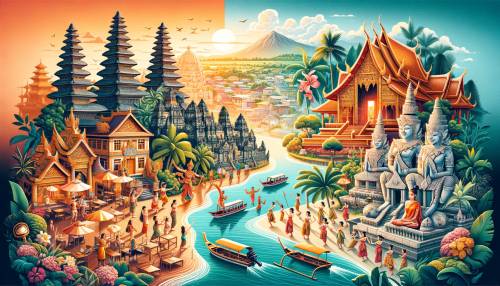
Bali vs Thailand
Bali and Thailand offer very different kinds of travel and long-term living. Compare beaches, culture, weather, food, housing, transport, remote work, healthcare and visas to…
Indonesian on Bali in 2026: essential words, phrases and polite communication
A practical Bahasa Indonesia guide for Bali visitors: pronunciation, polite forms of address, useful phrases for hotels, cafés and transport, and the difference between Indonesian…

Where to post an ad in Bali: how to sell an item, offer a service or find clients
Life in Bali constantly creates situations where you need to offer something to other people.