Why it is worthwhile for a Bali venue to be listed in “Places and venues”
A restaurant, café, bar, hotel, coworking space, salon, studio, dive centre or another offline business almost always already has at least one online presence. For some it is Google Maps, for others Instagram, Facebook, a website or a booking-service page. So a natural question is: why is another card needed?
Because different platforms solve different problems. Google Maps answers “what is nearby” well. Instagram shows atmosphere and current content. A website gives full control over information, but people still have to find it. A separate card in a local catalogue helps someone who is already looking for where to go, where to eat, where to stay or which service to choose specifically in Bali.
On Bali by Anilau, there is a dedicated Places and venues listing type for this purpose. The card remains relevant regardless of a particular promotion or event and gathers the main information about a venue in one place: description, address, map, opening hours, contacts, website and other useful details.
It does not replace Google Maps or social media. It is another way for someone to discover a venue and proceed to contact details, directions or the website.
“Places and venues” is a permanent business card
Events have a date after which they end. Ordinary promotional posts also have a short life: a post moves down the feed, a Story disappears and a promotion finishes.
A venue card works differently. It describes the place itself: what it is, where it is, what makes it different, when it is open and how to contact it.
Current Bali by Anilau cards can show a physical address, a map link, opening hours by day of the week, WhatsApp, email, an official website, a description and thematic tags.
This matters to an owner because all basic information is collected in one place instead of being scattered between Google Maps, an Instagram bio, saved Stories and messages.
Why add another card if you already have Google Maps?
Google Maps is practically essential for an offline business, and there is no reason to abandon it. But a user does not always begin a search with a map.
Someone may search for “where to have breakfast in Seminyak”, “a bar in Uluwatu”, “a coworking space in Canggu”, “a dive centre in Amed”, or read an article about a particular area and then move to suitable places from there.
A local catalogue works in exactly this situation. The user is already on a Bali-focused site, reading articles, looking through listings or searching for places by category. The venue card becomes an additional route to your business.
At the same time, it does not compete with the map. On the contrary, the card can provide the address and a map link, so a person can first understand whether the place suits them and then plan the route.
An additional page in search
A Places and venues card has its own public page with an individual title and description. Such pages can be indexed by search engines and create another entry point from search: such pages can be indexed by search engines and create another entry point from search.
This does not mean that publication will automatically put the venue first on Google. Position depends on competition, page quality, the search query and many other factors.
But an additional quality page about a venue creates one more opportunity to be found. It is especially useful when the text naturally names the area, type of place and real features: not simply “the best restaurant”, but “a cocktail bar and smokehouse near Hiriketiya”, “a coworking space with day rates in Canggu” or “a yoga studio in Uluwatu with classes in English”.
The more precisely a page answers a person’s specific query, the more useful it is both for search and for the visitor.
A tourist needs an answer, not an advertisement
The weakest venue card looks like an advertising slogan:
The best place on the coast! An incredible atmosphere, excellent service and unforgettable emotions!
This text explains almost nothing.
A useful card explains the specifics. For a restaurant: cuisine, price level, breakfast, vegetarian dishes, alcohol, an ocean view or whether a reservation is needed. For a coworking space: internet, workstations, meeting rooms, opening hours and rates. For a dive centre: season, training, instructors’ languages and dive areas. For a salon: which services are offered and whether an appointment is required.
A person opens the card not to read an advertisement. They are trying to decide whether the place suits them.
That is why an owner can often prepare a more useful description than a random catalogue author: the owner knows what really distinguishes the venue and which questions guests ask most often.
A card is especially useful for tourists and expats
For a local resident, the name of a small café or salon may have been familiar for years. A tourist is in a different situation: they have little time and almost no local context.
They do not know which areas are nearby, what the relevant street is called, whether it is worth travelling there specially or whether the place is open at the right time. An expat or someone living in Bali for several months knows the island better, but also keeps looking for new restaurants, services, classes and spaces.
That is why a Bali venue needs not only to be online, but also to be present where an audience interested specifically in Bali already is.
Bali by Anilau brings articles, a listings catalogue, an Event listing and venue cards together around one geography. For a business, this means more than another URL: it means presence inside a thematic Bali environment.
Several languages expand the audience for the same place
Bali is an international destination. Indonesians, Australians, Europeans, Ukrainians, Russian-speaking tourists and people from dozens of other countries may live in the same area at the same time.
If a venue is aimed at more than a local audience, one language version is often not enough.
Anilau projects publish content in several language versions. For a venue card, this makes it possible not to mix several languages into one description, but to give each audience a proper separate text.
This is especially useful for venues where language influences a client’s decision: excursions, schools, diving, medical and beauty services, coworking spaces, children’s activities and consulting services. If staff genuinely speak several languages, say so directly.
Just remember to update all versions together. Opening hours, prices, address, booking terms and contacts should not differ depending on the page language.
Instagram shows atmosphere well but stores reference information poorly
For restaurants, bars, salons and creative spaces, Instagram often remains the main communication channel. It is excellent for new photos, videos, Stories, daily menus and atmosphere.
But finding a specific practical detail there can be difficult. A user may have to look for opening hours in the bio, the address through the map button, the menu in Highlights and the WhatsApp number in an old post.
A Places and venues card solves a different problem: it stores the key information in a stable structure.
It is best to use both channels together. Instagram creates the desire to visit, while the venue card helps a person quickly check the details and decide.
A venue website does not make the card useless
If a business has a good website, that is a strong asset. But the website and a card in a thematic catalogue appear at different stages of the customer journey.
A website usually receives people who already know the venue’s name or have been sent a direct link. A catalogue may attract someone before they have decided exactly where to go.
The card can therefore act as an entry page: briefly explain the venue, show the address and hours, then send an interested user to the official website, WhatsApp or map.
“Places and venues” plus “Event” is especially useful
For venues that regularly hold events, these two listing types solve different problems and complement each other well.
“Places and venues” is the permanent card for the place itself. It answers: what is this place and why should someone visit it at all?
“Event” is the card for a specific future event. It answers: what will happen here on a particular day?
For example, a bar can have a permanent card with its concept, address, opening hours and contacts, and separately publish a concert, tasting or party in the Event listing. A yoga studio can have a card for the space itself and separate events for retreats or special workshops.
This means people do not have to choose between promoting the venue and promoting the event. The permanent card builds the venue’s presence, while the Event listing gives people a reason to visit now.
What an owner should make especially clear
A card becomes useful not through the mere fact of publication, but through the quality of its information.
The name should match the name people see on Google Maps, Instagram and the sign outside. Give the full address even if “everyone knows” the place. Opening hours should be real, including weekends and a separate kitchen schedule if it differs from the bar or hotel schedule.
In the description, start not with the brand story but with the visitor’s question: what kind of place is this? Only then explain the concept, owners, awards, ingredients, interior or history of the project.
For a restaurant, a food photo may be more useful than a logo. For a hotel, show rooms and the grounds. For a coworking space, show the working area. For a salon, show the interior and real service examples. The person should be able to understand visually where they are going.
Contacts should also lead to a place where someone really answers. If bookings happen through WhatsApp, there is little point in making a phone number that nobody answers the primary contact.
Do not copy a Google Maps or Instagram description without adapting it
The same information can be used on different platforms, but the format should match the page’s purpose.
An Instagram bio is usually too short. A text from the business website may be too corporate. Google Maps often has a minimal description because the map itself displays much of the information.
For a venue card, it is better to write a separate compact text: first explain what the venue is and where it is, then what makes it different, and finally the practical details.
This makes the text useful both for someone hearing the name for the first time and for a search engine that needs to understand the page.
Update the card when reality changes
Bad information is worse than no information. If a venue has moved, changed its schedule or stopped opening on Mondays, an old card annoys a customer before the visit even begins.
It is particularly important to update the address and map point, opening hours, WhatsApp and phone number, official website, operating format, significant changes to the concept and booking information.
A temporary promotion does not have to become a permanent part of the description. For short offers, use separate promotion channels and keep the venue card as stable and current as possible.
Reviews strengthen a card but do not replace the description
Registered users can leave reviews on venue cards. This is a useful addition because a visitor receives not only information from the owner or editor, but also the experience of other people.
But do not expect reviews to explain the business concept by themselves. The owner still needs to provide correct opening hours, address, contacts and a proper description.
There is also no need to artificially fill the card with reviews. A few real, substantive reviews are more valuable than ten identical “everything is great” phrases.
Who should especially consider being listed
The format is useful for almost any place a person can actually visit: a restaurant, café, bar, hotel, hostel, villa, coworking space, salon, spa, fitness or yoga studio, dive centre, surf school, shop, showroom, club, school, gallery, tourist attraction or service with a physical location.
The benefit is especially visible where a customer chooses between several similar options. The stronger the competition in an area, the more important it is to explain why your place suits a particular person.
For a venue in Seminyak, it is not enough to be “another café”. For a villa in Sanur, “another beautiful place to stay” is not enough. For a coworking space in Canggu, “a place with Wi-Fi” is not enough. A good card turns a broad category into a clear, specific offer.
What you should not promise
Listing a card does not guarantee a queue at the door, first place on Google or dozens of new customers on the first day.
Its value is different: the business gets an additional permanent point of presence in the local information environment. The page can be found through the catalogue, internal links and search engines; the user receives structured information and direct contacts.
The result depends on the venue itself, the quality of the card, demand, the region, the season and whether you use the page together with other channels.
It is therefore more reasonable to treat Places and venues not as an advertising campaign, but as part of the business’s basic digital infrastructure alongside Google Maps, social media and its own website.
How to use the card after publication
After publication, you do not have to wait for someone to find the page by themselves.
Add the link to the website, send it to guests, use it in local communities, attach it to venue posts and give it to partners. If you hold an event, its promotion can lead people both to the Event card and to information about the venue itself.
This is especially convenient when a business does not have a complete website of its own: one card can give a person the description, address, map, schedule and contacts without making them collect everything from several services.
Checklist for a good “Places and venues” card
Before publishing, check that the Places and venues listing type is selected, the name matches the actual business name, the category and location are correct, the full address and accurate map point are provided, opening hours are current, contacts really work, the first paragraphs explain the type of place, photos show the actual venue and language versions do not contradict each other.
After publication, open the card on a phone and imagine that you are seeing the name for the first time. If it is clear within a minute what kind of place it is, where it is, when it is open and why it may be interesting, the card is doing its job.
Not another social network, but another entry point
An owner does not need to choose between Google Maps, Instagram, a website and Bali by Anilau. These tools work at different stages.
Google Maps helps people find a place on the map. Social media shows its life and atmosphere. The website gives maximum control. A Places and venues card adds the venue to the local catalogue and the project’s Bali-focused information environment.
The easier it is for a person to discover a place, understand its format and move directly to directions or contact details, the fewer potential guests are lost between initial interest and an actual visit.
Updated: 26 September 2026.
Comments
Read also
All articles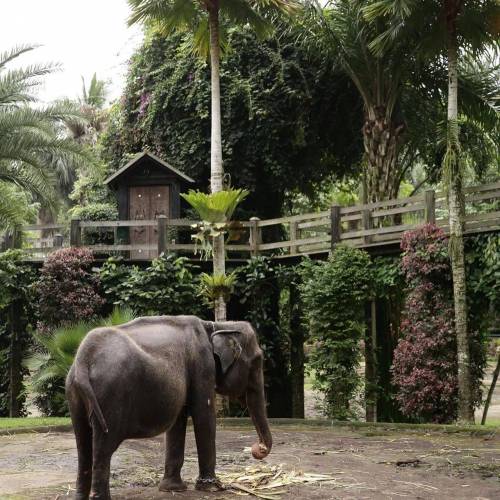
Elephant Park Bali
A long time ago, very beautiful and kind elephants lived on the Indonesian island of Sumatra. They walked in the tropics, fed on palm leaves…
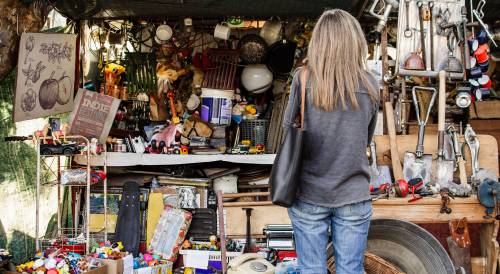
Responsible consumption: what we leave behind
Keeping things useful, buying fewer unnecessary items and passing possessions on are everyday ways to care for our surroundings and future generations. How to make…
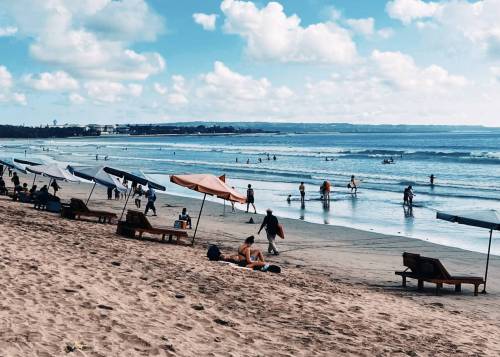
Top 5 things to do in Kuta in 2026: surfing, food, Waterbom, sunsets and walks
Kuta remains a convenient first stop in Bali: the airport, a long beach, surf schools, Waterbom, a shopping centre and nightlife are all close by.…
Indonesian on Bali in 2026: essential words, phrases and polite communication
A practical Bahasa Indonesia guide for Bali visitors: pronunciation, polite forms of address, useful phrases for hotels, cafés and transport, and the difference between Indonesian…
Gili - Indonesian Maldives
Numerous advertisements on the Internet and on tourist brochures talk about the paradise island of Bali. And according to the classics, you immediately imagine snow-white…

Bali vs Thailand
Bali and Thailand offer very different kinds of travel and long-term living. Compare beaches, culture, weather, food, housing, transport, remote work, healthcare and visas to…