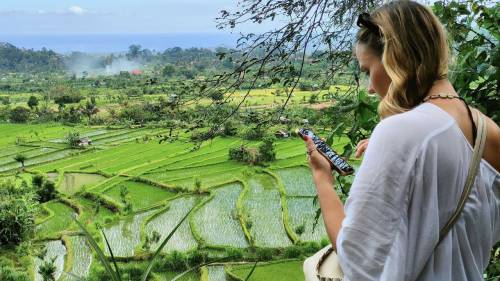
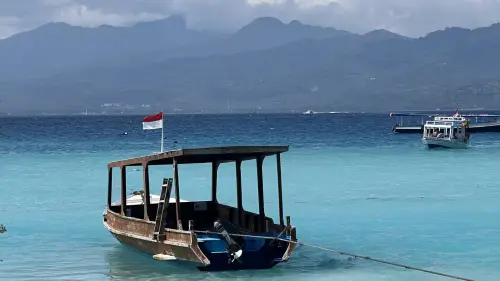
Sidemen is a district in Karangasem, in Bali’s green eastern interior. People often come for the view across rice fields toward Mount Agung, but the district is more than a scenic stop: it is a network of villages where farming, weaving and everyday services continue alongside tourism. This page is for people deciding whether Sidemen suits a visit or a longer stay, and for anyone looking for something in a particular part of the district.
Sidemen comprises ten villages, including Sidemen, Sinduwati, Sangkan Gunung, Tangkup and Telaga Tawang. The familiar name “Sidemen” can refer to the district or to one village, so it is worth checking which place an address actually means. A room near the main village, a workshop in another settlement and a home farther along a rural road are different choices, even if a listing uses the same district name.
The valley’s rice fields are part of a working landscape, not just a view from a hotel terrace. The shape of the land, water channels and village roads influence how people move between homes, fields and local services. For visitors, a walk or drive through the valley may be the reason to come; for residents, the same landscape is tied to work, access and seasonal routines. When comparing a place to stay, notice whether it is in the village center, on a slope or along a route between settlements.
Sidemen is also known for handwoven textiles, including endek and songket. Local government records and cultural materials document weaving businesses and makers in villages such as Sidemen, Sinduwati, Telaga Tawang and Talibeng. That makes the craft more than a souvenir theme: it is a livelihood and a source of local knowledge. If you are looking for a textile, a workshop, a craft-related job or a specialist service, check the maker’s village and what the listing actually describes instead of assuming every shop offers the same work.
The Unda River is a useful geographical reference: local health-service information describes it as dividing the area into western and eastern Sidemen. That distinction can help when comparing addresses or planning regular trips, though the river is not a substitute for checking the actual road route. Sidemen is hilly, and a short straight-line distance can feel different on the ground. Ask where a service is located and how people usually reach it before relying on a map estimate.
Sidemen is sometimes marketed as “the next Ubud,” but that comparison can set the wrong expectation. Its appeal is not that it reproduces a larger visitor center; it lies in the valley setting, village scale and living textile and agricultural traditions. It is also distinct from Kintamani: both are inland Balinese areas, but Sidemen is in Karangasem and has its own geography and village network. Choose by the experience and practical needs you actually have, not by a shortcut label.
For a longer stay, think through ordinary errands as well as scenery: groceries, transport, repairs, health services, work and the distance between your accommodation and the places you will visit repeatedly. Amenities may be spread among villages rather than grouped in one central strip. If you plan to explore higher or more remote roads, check local conditions before setting out and leave room for travel time. The exact village and address will be more useful than a broad promise that a place is “near Sidemen.”
The Sidemen private listings catalogue lets people share a local offer and look for information posted by others, including accommodation, transport, work, goods, crafts and services. Use the village name to make the search more precise, then check the address and details against your plans. If you have something relevant to offer in the district, you can publish that information here as well. Listings are a way to connect people; they do not guarantee that a particular option is available.