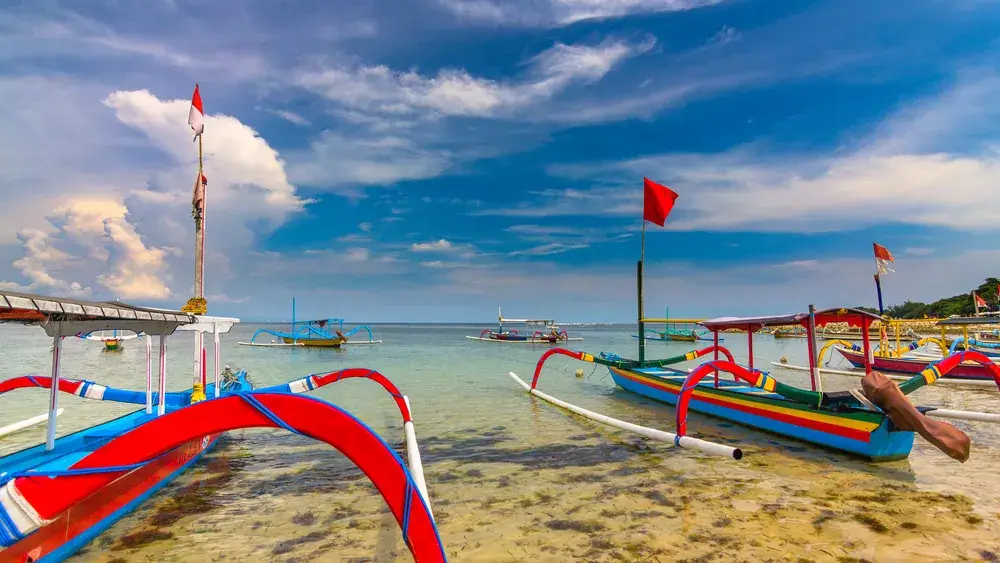
Jimbaran is not the whole Bukit Peninsula, nor is it simply a line of seafood restaurants by the sea. Administratively, it is an urban village within South Kuta. In practice, it is a large lived-in area shaped by a calm bay, a market, a university campus, and roads leading towards the airport, Nusa Dua, and the western beaches of the peninsula. Several versions of Jimbaran exist side by side: the shore with evening tables, ordinary residential streets, quieter inland neighbourhoods, student life, and services used by residents as well as short-term visitors.
The main reason to choose Jimbaran is its balance of sea and everyday life. The bay offers the familiar Bali picture of pale sand, sunsets, and seafood, yet the first row of beach venues does not turn into an endless hotel strip. There are markets, small shops, cafés, practical services, and different housing formats behind the shore. This makes Jimbaran useful not only for a few nights, but also as a base for people who want to live near the sea without choosing the denser rhythm of Kuta or Seminyak.
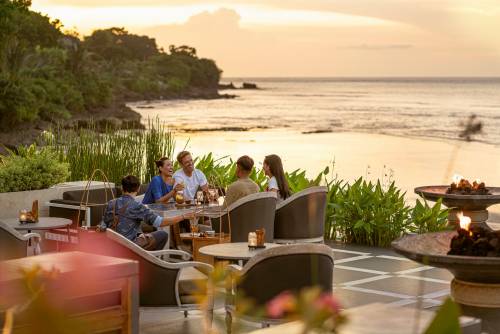
Seafood is important here not because of a tourism slogan, but because it remains part of the area’s identity. The coast and fish market are connected with the history of the settlement, while evening dining on the sand has become one of Jimbaran’s best-known scenes. Still, it is worth separating a special dinner from normal daily life. At busy times, visitors arrive from other parts of Bali and the bay changes its rhythm. Anyone choosing the area for quiet walks, swimming, or longer stays should keep that difference in mind.
Another important side of Jimbaran is that the beach is not its only centre. The Bukit Jimbaran campus of Udayana University gives this part of South Kuta a stronger academic and residential character than many nearby resort areas. It affects daily traffic, demand for long-term rentals, affordable food, and household services. Jimbaran suits people who want more than an enclosed hotel compound: a place with routes to study, work, the market, the beach, and the airport.
Once the area is chosen, Anilau listings are more useful with a precise local search than with a broad phrase such as “housing in Bali”: try “long-term rental in Jimbaran,” “room near Udayana University,” or “home cleaning service in Jimbaran.” The same local focus works for offering a house for rent, looking for a housemate, or posting a practical service for residents.
Jimbaran is not entirely walkable. The bay, residential streets, university area, and other parts of South Kuta are not all within one short walk. A scooter, car, taxi, or ride-hailing service makes daily life easier. Being close to the airport is convenient, but it does not remove the south Bali dependence on traffic conditions. It is better to plan journeys by an actual route and time of day rather than by distance on a map.
Jimbaran works well for couples, families, students, remote workers, and visitors who want a beach base with a more ordinary local rhythm. It can also be convenient for a short stay near the bay instead of central Kuta. Those looking for a fully planned resort holiday may prefer Nusa Dua, where hotels, beaches, restaurants, and some leisure facilities are gathered in one organised area. Those whose main purpose is marine activities with shore-based operators should compare Tanjung Benoa. Jimbaran is chosen less for a continuous entertainment programme than for the balance between the bay, housing, everyday life, and south Bali connections.