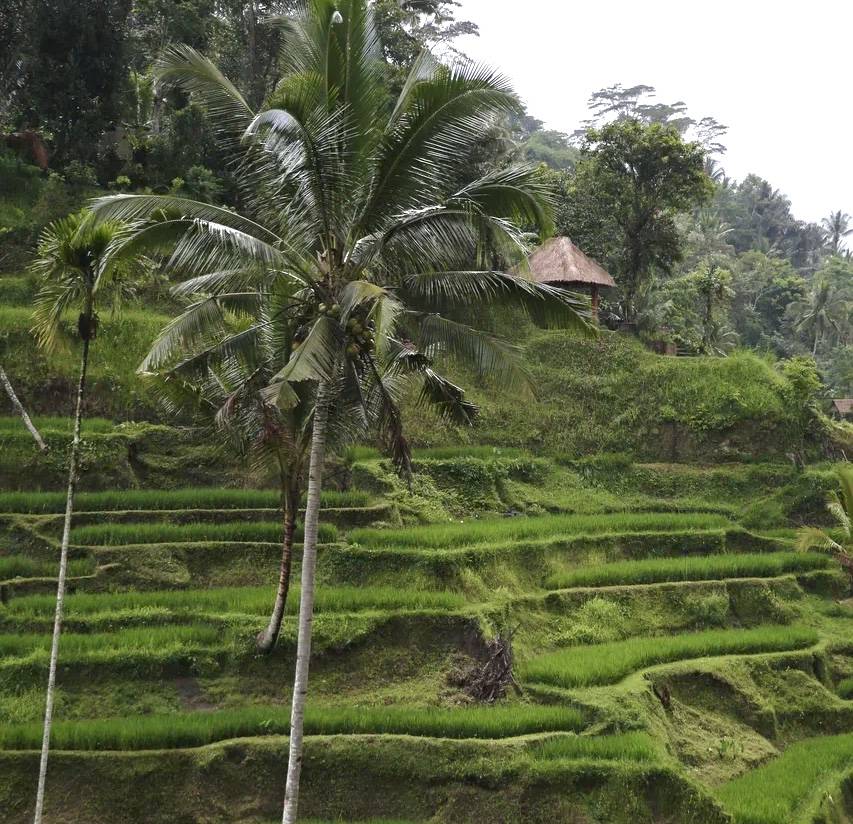
Tegallalang is a district in Gianyar, north of Ubud, where Bali’s celebrated rice terraces are only one part of a much wider rural area. The name often brings Ceking’s stepped fields to mind, yet daily life here also follows village roads, farms, workshops and small settlements spread across the uplands. This page is for people looking beyond a viewpoint: those considering a stay, arranging everyday needs or searching for a particular local service.
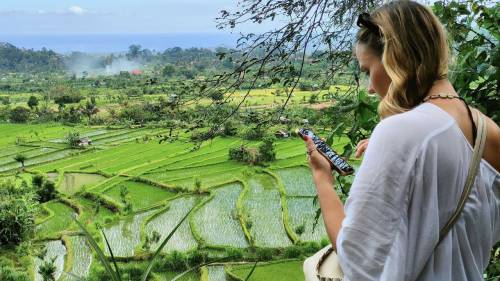
Ceking is the best-known landscape in the district. Its paddies follow a sloping valley, and the terraces reflect the practical work of farming and water management rather than a decorative design. The traditional subak system links irrigation with the people who cultivate the land. Fields change with the agricultural cycle: a view that appears green in one season may look recently harvested or newly planted in another. That changing landscape is part of the place, and the rice fields remain working ground, not simply a backdrop.
Outside the familiar terrace area, Tegallalang opens into villages and quieter roads. Places such as Taro, Sebatu, Kedisan and Kenderan each have their own setting; they should not be treated as a single attraction or as interchangeable with Ceking. The district also has a long association with local making and craft work. Depending on the village, that may mean carved or shaped objects, small workshops, art spaces or other forms of skilled work. If a particular craft matters to you, it is worth checking the exact location and what is being offered rather than relying on the district name alone.
The area’s connection to Ubud is useful, but Tegallalang is not simply an extension of the town. A trip from the southern edge toward villages farther north can involve a different landscape and a different daily rhythm. Local roads carry residents, farm activity and visitors at once, and the quickest route is not always the most convenient one for a regular commute. When choosing a place to stay or arranging a service, consider where it is in the district and which roads you would use most often.
For a longer visit, practical details can matter more than a famous view: the kind of room or house available for the period you need, transport suited to your route, food and household services nearby, or someone who can help with repairs and other everyday jobs. People working with local materials may look for a craftsperson or a supplier; others may need a driver, a tutor, a health or wellbeing service, or a workspace. Needs differ from one household to another, and distances between villages make the exact location worth checking.
Tegallalang also suits people who want a quieter base while keeping Ubud and other parts of Gianyar within their plans. The trade-off is that errands and social plans may involve more thought about transport than they would in a compact town centre. A useful search starts with the actual task and the part of the district that makes sense for it, whether that is near the main road, among the villages, or closer to the rice-growing landscape.
This page is a directory of private listings for Tegallalang. You can post your own local offer or information, or look for accommodation, transport, craftspeople, household help, work and other useful services in the district. Read each listing for its specific location and terms, then compare it with your route and needs. That makes it easier to find something relevant to Tegallalang as it is lived across its villages, not only as it appears in photographs of Ceking.